Bike Fitting & Pelvic Floor Physical Therapy for Cyclists in San Diego
Cycling should challenge your legs and cardiovascular system—not leave you dealing with persistent saddle pain, genital numbness, pelvic pain, or sexual dysfunction.
At Athletic Edge Physical Therapy in San Diego, we work with cyclists experiencing symptoms that can be influenced by both bike position and pelvic floor function. Our approach combines professional bike fitting, sports physical therapy, and pelvic floor physical therapy to look beyond the painful area and determine why symptoms are occurring in the first place.
For cyclists experiencing saddle pain, pudendal nerve symptoms, pelvic floor dysfunction, or erectile dysfunction, simply changing saddles or taking time off the bike may not address the entire problem.
Why Can Cycling Cause Pelvic Floor Symptoms?
Cyclists spend prolonged periods in a position that places pressure through the pelvis and perineal region. Your saddle choice, riding position, training volume, mobility, strength, and ability to tolerate sustained cycling positions can all influence how your body responds.
This is why two cyclists riding the same mileage on similar bikes can have completely different experiences.
For some athletes, symptoms may be primarily related to bike setup. For others, pelvic floor muscle function, nerve sensitivity, hip or spine mobility, training load, or a combination of factors may contribute.
At Athletic Edge, we evaluate both the cyclist and the bike.
Common Pelvic Floor Symptoms We See in Cyclists
Cyclists may seek physical therapy or bike fitting because of symptoms such as saddle pain or pressure, perineal or genital numbness and tingling, pelvic or perineal pain, pudendal neuralgia or pudendal nerve irritation, erectile dysfunction, and pelvic floor dysfunction.
These symptoms shouldn't automatically be assumed to be caused by the saddle alone.
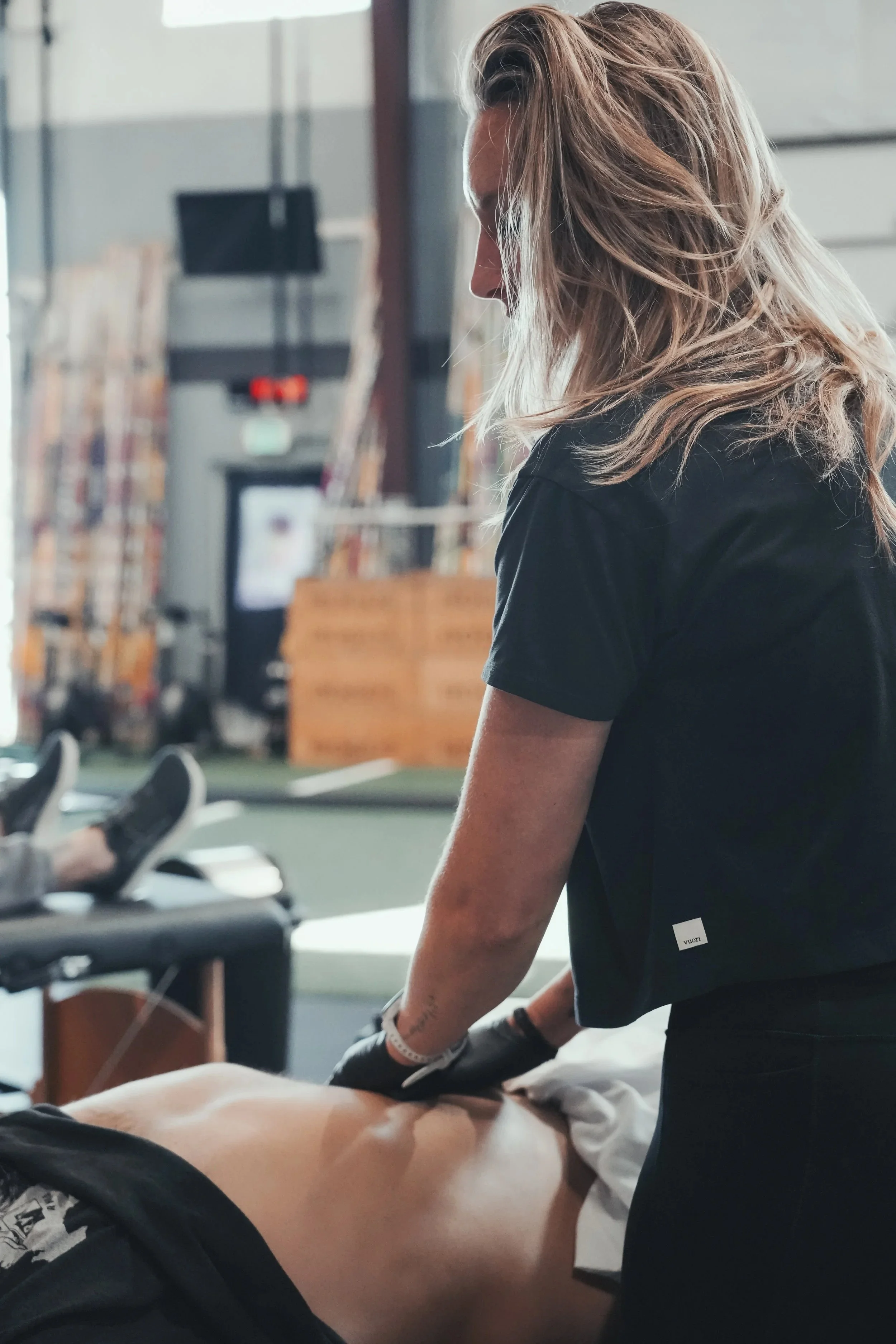
Pudendal Neuralgia & Cycling
The pudendal nerve supplies sensation to portions of the pelvic and genital region and travels through an area that can be exposed to pressure while cycling.
Symptoms associated with pudendal nerve irritation can include burning, tingling, numbness, altered genital sensation, or pain in the perineal region, particularly with sitting or cycling.
A cyclist experiencing these symptoms needs more than someone simply looking at saddle height.
We assess the cyclist's symptoms, riding position, pelvic and hip mobility, trunk control, pelvic floor function, training volume, and other factors that may be contributing to irritation.
Importantly, not every case of pelvic pain or genital numbness is pudendal neuralgia. A thorough assessment helps determine whether symptoms appear consistent with pudendal nerve involvement or whether another source should be investigated.
Erectile Dysfunction in Cyclists
Sexual symptoms can be uncomfortable to talk about, but they are important.
Research has examined the relationship between prolonged perineal pressure during cycling, genital numbness, and sexual function. Erectile dysfunction can have many potential causes, so it should not automatically be attributed to cycling or pelvic floor dysfunction.
However, when symptoms occur alongside cycling-related numbness, saddle discomfort, or pelvic symptoms, bike position and pelvic floor function deserve consideration as part of a comprehensive evaluation.
Depending on the individual, treatment may involve modifications to bike setup, changes in training exposure, pelvic floor rehabilitation, mobility and strength work, and collaboration with a physician when appropriate.
Saddle Pain Isn't Always Just a Saddle Problem
One of the most common responses to saddle discomfort is:
“I need a different saddle.”
Sometimes that's true.
But repeatedly buying saddles without determining why you're uncomfortable can become an expensive guessing game.
A professional bike fit looks at the interaction between the cyclist and the bicycle, including factors such as saddle position, handlebar position, reach, riding posture, hip and knee mechanics, and how the athlete distributes pressure on the bike.
At Athletic Edge, we have an additional advantage: we're physical therapists.
We're not only looking at the bicycle. We're assessing the person riding it.
Pelvic Floor Dysfunction in Cyclists
Pelvic floor dysfunction doesn't always mean that the pelvic floor is simply “weak.”
Some cyclists may have difficulty relaxing or coordinating the pelvic floor appropriately. Others may demonstrate strength, mobility, breathing, or movement impairments elsewhere that influence how they tolerate time on the bike.
That's why simply prescribing Kegels isn't an appropriate solution for every cyclist with pelvic symptoms.
Your treatment should be based on what your individual assessment shows.
Why Combine Bike Fitting With Physical Therapy?
A traditional bike fit asks:
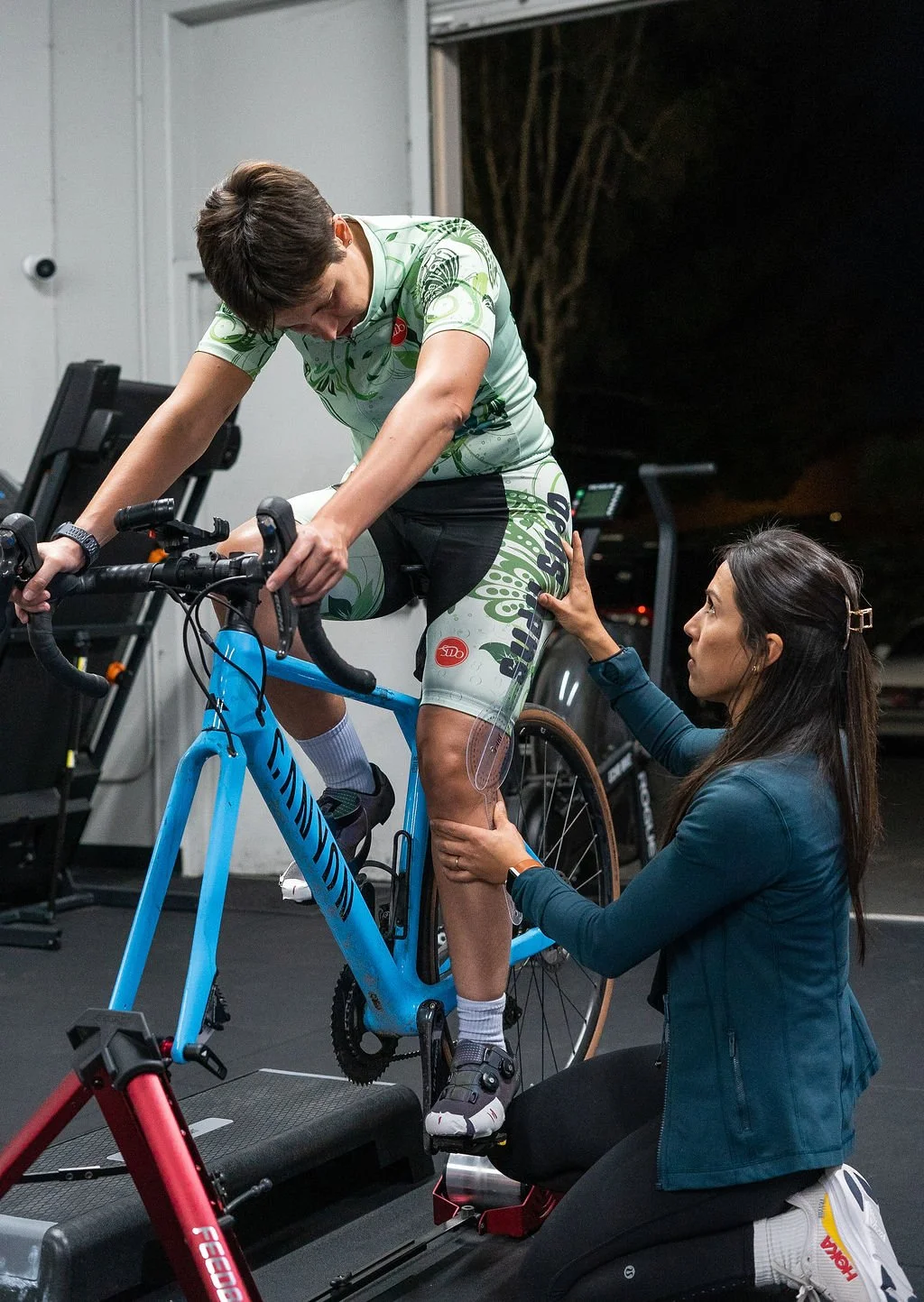
How can we adjust the bike to fit the rider?
Physical therapy asks:
What does the rider's body need to comfortably and efficiently tolerate cycling?
At Athletic Edge Physical Therapy, we can address both.
Your assessment may include your cycling position and bike setup as well as relevant measures of hip mobility, spine mobility, strength, movement control, pelvic floor function, symptom behavior, training load, and cycling-specific demands.
From there, we can determine whether your treatment should focus primarily on the bike, your body, your training—or a combination of all three.
Professional Bike Fitting in San Diego
Athletic Edge Physical Therapy provides professional bike fitting in San Diego for recreational cyclists, road cyclists, triathletes, mountain bikers, and athletes returning to cycling after injury.
Our goal isn't simply to make your bike look “correct” according to a predetermined set of angles.
We want your bike position to work for your anatomy, mobility, strength, riding goals, training volume, injury history, and symptoms.
For cyclists dealing with pelvic floor symptoms, this individualized approach becomes even more important.
When Should a Cyclist Seek Help?
Consider a professional evaluation if you're experiencing persistent saddle or perineal pain, genital numbness or tingling, pelvic pain while or after riding, symptoms consistent with pudendal nerve irritation, erectile or sexual dysfunction associated with cycling, or pelvic floor symptoms that worsen as your riding volume increases.
You don't necessarily need to stop cycling altogether.
The goal is to identify the factors contributing to your symptoms and determine how we can modify your bike, body, or training so you can continue doing what you enjoy safely and comfortably.
San Diego Bike Fitting + Pelvic Floor Physical Therapy at Athletic Edge
Cyclists are athletes, and pelvic health is part of athletic health.
At Athletic Edge Physical Therapy in San Diego, our combination of sports physical therapy, pelvic floor rehabilitation, and professional bike fitting allows us to evaluate cycling-related pelvic symptoms from multiple angles rather than treating the bike and the body as two separate problems.
If saddle pain, numbness, pudendal nerve symptoms, erectile dysfunction, or pelvic floor dysfunction are interfering with your riding, we can assess both you and your bike and create an individualized plan to get you riding more comfortably and confidently.
Ready to get back to riding without constantly thinking about your symptoms?
Book a Bike Fit or Physical Therapy Evaluation at Athletic Edge Physical Therapy in San Diego.
Frequently Asked Questions About Bike Fitting & Pelvic Floor Physical Therapy
-
Cycling places prolonged pressure through the pelvis and perineal region, particularly during longer rides or when spending significant time in an aggressive riding position. For some cyclists, this may contribute to saddle discomfort, numbness, pelvic pain, or changes in pelvic floor function.
However, cycling-related symptoms can have multiple contributing factors. Bike position, training volume, mobility, strength, pelvic floor function, and individual anatomy can all play a role.
-
A professional bike fit can help identify whether aspects of your bike position may be contributing to excessive pressure or discomfort. Saddle height, saddle position, reach, handlebar position, and overall riding posture can all influence how you distribute pressure on the bike.
If symptoms persist despite bike adjustments, physical therapy may also be appropriate to evaluate factors outside of the bike itself.
-
It depends on what's contributing to your symptoms—and sometimes the answer is both.
A bike fit evaluates how your body interacts with the bicycle, while physical therapy evaluates factors such as mobility, strength, movement control, pelvic floor function, and how your symptoms respond to cycling.
At Athletic Edge, we can evaluate both the cyclist and the bike to determine where changes may be most helpful.
-
Prolonged pressure through the perineal region during cycling may contribute to irritation of structures in that area, including the pudendal nerve. Symptoms may include burning, tingling, numbness, or pain in the pelvic or genital region.
Not every case of pelvic or genital symptoms is caused by pudendal nerve irritation, so an individualized evaluation is important for determining what may be contributing to your symptoms.
-
Research has examined associations between prolonged perineal pressure during cycling, genital numbness, and sexual function. However, erectile dysfunction can have many potential causes and should not automatically be attributed to cycling or pelvic floor dysfunction.
If sexual symptoms occur alongside cycling-related numbness, saddle discomfort, or pelvic symptoms, it may be appropriate to evaluate bike position, pelvic floor function, and other contributing factors. Medical evaluation may also be recommended depending on the individual's symptoms.
-
Not necessarily. The appropriate response depends on the severity, duration, and cause of your symptoms.
Continuing to ride through persistent numbness or pain without addressing the underlying issue may not be the best approach. A professional evaluation can help identify whether changes to your bike setup, riding position, training volume, recovery, or physical function may allow you to continue cycling more comfortably.
-
No. Pelvic floor physical therapy can be appropriate for both men and women.
For cyclists, pelvic floor PT may address symptoms such as pelvic pain, perineal discomfort, urinary or bowel symptoms, sexual dysfunction, or difficulty coordinating the pelvic floor. Treatment is based on the individual's symptoms and assessment rather than simply assuming the pelvic floor is weak.
-
Not necessarily. Pelvic floor dysfunction does not always mean the muscles are weak.
Some individuals may have difficulty relaxing or coordinating their pelvic floor, while others may have strength, mobility, breathing, or movement impairments that contribute to their symptoms. That's why treatment should be based on an individual assessment rather than automatically prescribing Kegels or strengthening exercises.
-
There isn't one specific timeframe that applies to every cyclist. A bike fit may be particularly useful when you purchase a new bike, significantly change your riding position, increase your training volume, return from an injury, or begin experiencing new or persistent discomfort.
Your position may also need to change as your mobility, strength, flexibility, riding goals, or physical needs change.
-
Athletic Edge Physical Therapy provides professional bike fitting in San Diego for recreational cyclists, road cyclists, triathletes, mountain bikers, and athletes returning to cycling after injury.
Because our bike fits are performed by physical therapists, we evaluate more than just the bicycle. We look at how your body moves, how you tolerate your riding position, and what factors may be contributing to pain or discomfort.
If you're dealing with saddle pain, numbness, pelvic pain, or other cycling-related symptoms, you can book a bike fit or physical therapy evaluation with Athletic Edge Physical Therapy.