Deceleration Training in ACL Rehab
Why Athletes Need to Learn to Stop Before They Return to Sport
An ACL injury can take an athlete out of their sport for months. Getting back isn't just about rebuilding strength, getting rid of knee pain, or being able to run again. It's about preparing the knee to handle the speed, force, and unpredictability of competition.
One part of that process that deserves more attention is deceleration training.
Think about what happens during a basketball game when an athlete sprints down the court, plants one foot, and suddenly stops to change direction. Or a soccer player chasing a ball who has to slam on the brakes before cutting around a defender.
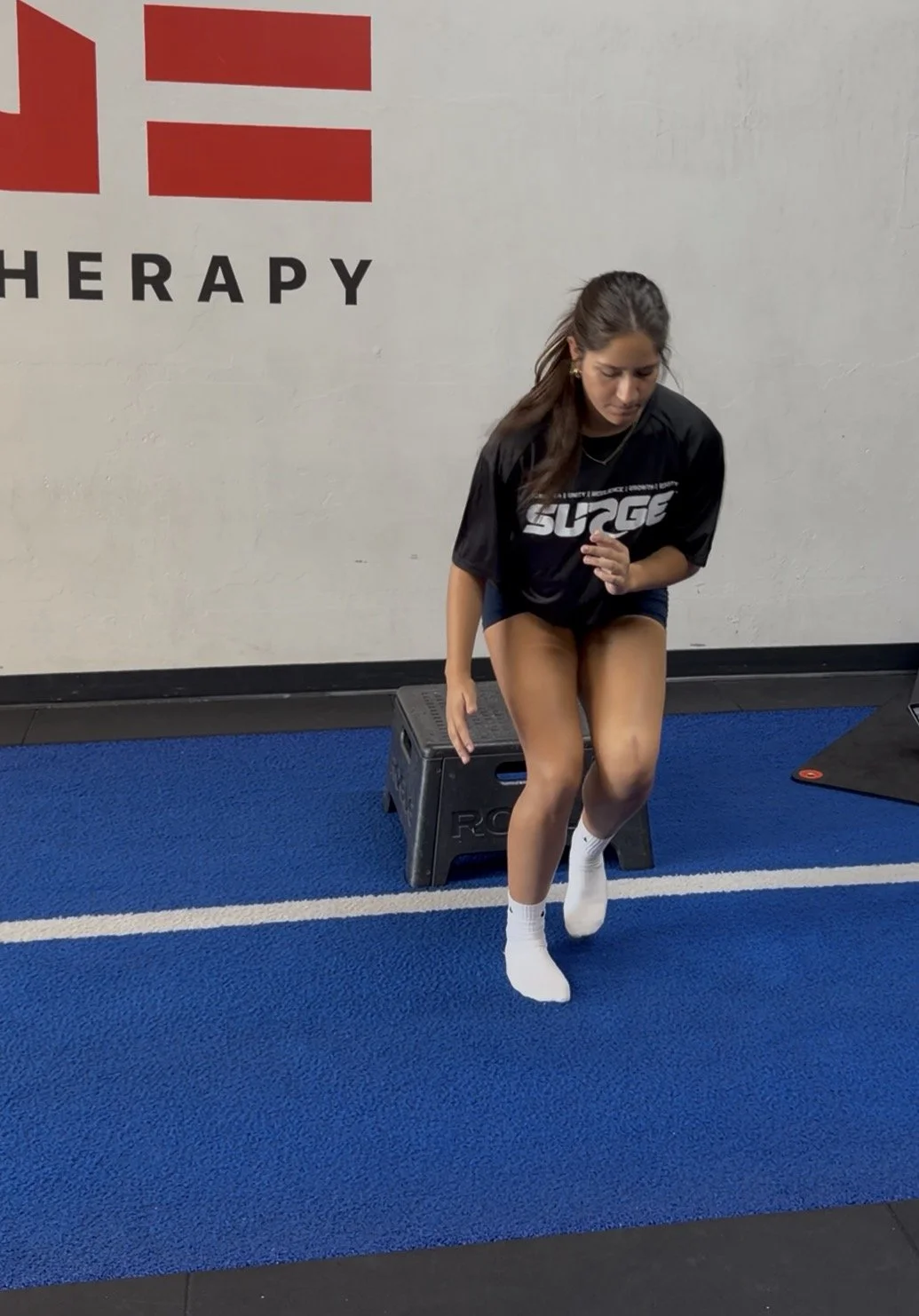
These movements require more than strength. The athlete needs to absorb force, control their body position, and transition quickly into the next movement.
After an ACL injury or reconstruction, those abilities need to be progressively rebuilt as part of a comprehensive return-to-sport program.
At Athletic Edge Physical Therapy in San Diego, we believe ACL rehabilitation should prepare athletes for the actual demands of their sport, not just help them get through their exercises in the clinic.
Let's break down why deceleration matters, what deceleration training looks like during ACL rehab, and how it fits into the process of returning to sport.
What Is Deceleration Training?
Deceleration is your body's ability to slow down or stop movement by absorbing and controlling force.
Every time you land from a jump, stop during a sprint, or change direction on the field or court, your muscles and joints must manage the forces created by your movement.
This is sometimes called force absorption or braking.
While acceleration focuses on producing force to move faster, deceleration focuses on controlling that force to slow down safely and efficiently.
Athletes use deceleration constantly in sports such as:
Basketball, when stopping for a jump shot or changing direction on defense.
Soccer, when slowing down to make a cut or react to another player.
Volleyball, when landing after a block or spike.
Football and lacrosse, when braking before a change of direction.
Tennis, when stopping and pushing off in another direction.
Deceleration is also relevant to running, jumping, and many strength and conditioning activities.
Research examining ACL injuries in sporting situations has identified actions such as cutting, landing, and decelerating among the movement contexts associated with noncontact ACL injuries. These findings support the need for rehabilitation and injury-prevention programs to address the specific demands of an athlete's sport.
Read research on ACL injury situations.
The takeaway: Athletes need to train their ability to absorb force, not just their ability to produce it.
Why Is Deceleration Important After an ACL Injury?
The anterior cruciate ligament (ACL) helps stabilize the knee, particularly during movements involving rotation and changes in direction. After an ACL tear and reconstruction, athletes need to rebuild strength, movement control, and the ability to tolerate progressively greater athletic demands.
That process takes time, and the appropriate progression depends on the athlete's recovery, clinical findings, and sport.
Here are three reasons deceleration deserves a place in ACL rehabilitation.
1. Strength alone doesn't prepare you for every sporting movement
Rebuilding quadriceps, hamstring, glute, and calf strength is a major part of ACL rehab.
But lifting weights in a controlled environment is different from sprinting toward an opponent and suddenly stopping.
During a squat, for example, an athlete can focus on a predictable movement with a stable base of support. During a game, the athlete may need to brake on one leg, react to an unexpected stimulus, and immediately accelerate in another direction.
Both situations require strength, but the demands are different.
The Aspetar clinical practice guideline for ACL reconstruction rehabilitation recommends combining strength training with motor-control training. It also supports incorporating plyometric and agility training into rehabilitation when appropriate.
The goal isn't to replace strength training with sport-specific drills. It's to progressively connect strength with the movements the athlete needs to perform.
2. Athletes need to learn to absorb force before repeatedly producing it at high speeds
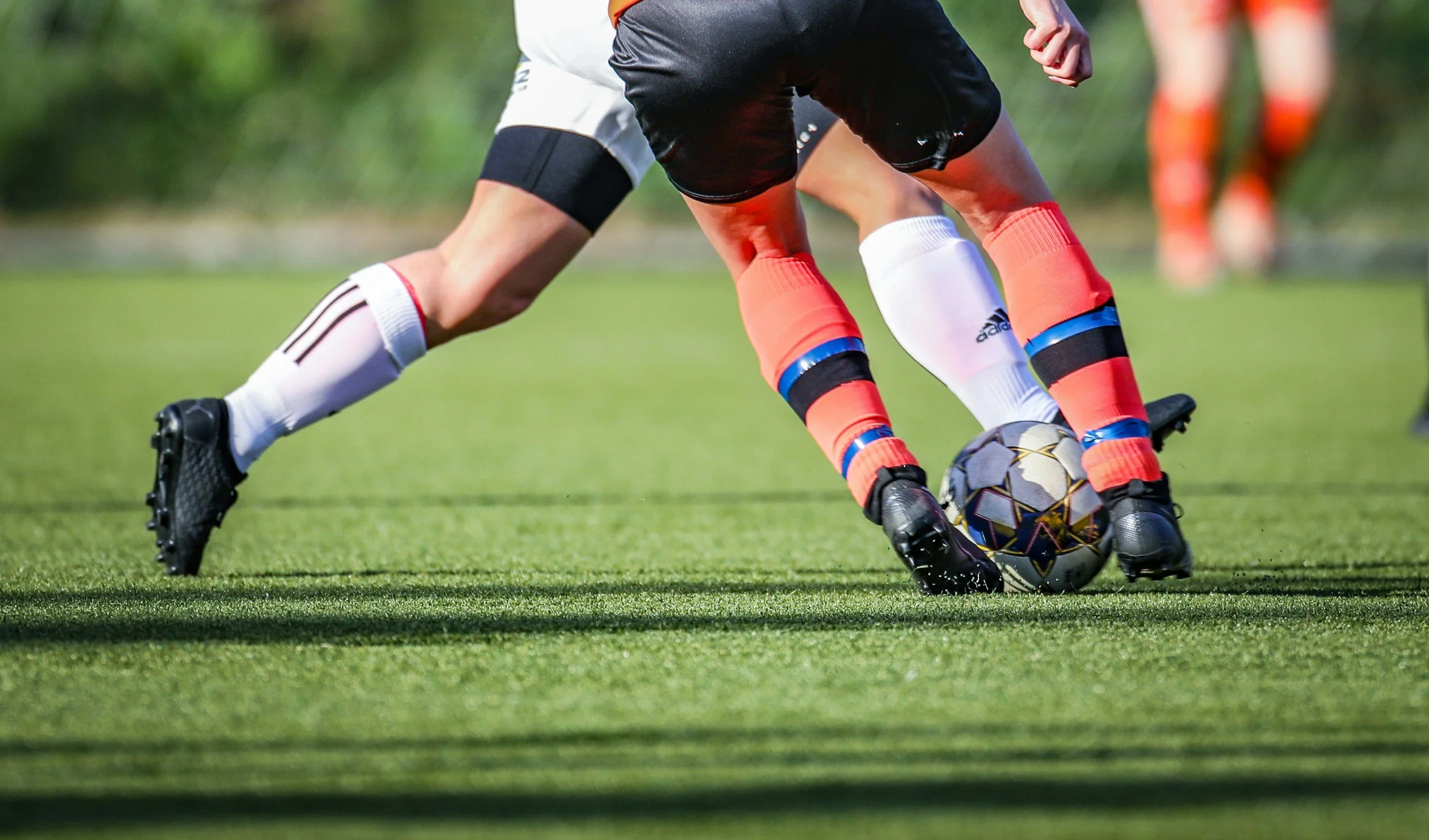
Many athletes are eager to get back to sprinting, jumping, and explosive movements after an ACL injury.
Those activities are important, but they shouldn't be introduced without considering the athlete's ability to tolerate the load.
A good rehabilitation progression develops the ability to control movement and absorb force before advancing toward more demanding, high-speed activities.
For example, an athlete might progress from controlled squats and step-downs to landing drills, then to more dynamic single-leg tasks and planned deceleration drills.
The exact progression will vary. Not every athlete will follow the same sequence, and exercises should be selected according to their current capacity.
This is where the combination of strength, movement quality, and progressive loading matters.
3. Returning to sport means handling unpredictable situations
In a game, athletes rarely get perfect conditions.
They have to react to an opponent, adjust their foot placement, land from an awkward position, or stop quickly when a play changes.
Research and expert consensus support a criteria-based approach to returning to sport after ACL injury, including assessments of strength, movement quality, functional performance, and psychological readiness.
The Panther Symposium ACL Injury Return to Sport Consensus Group emphasizes that return-to-sport decisions should include objective physical measures and that returning to practice should precede a progressive return to competition.
Deceleration training helps bridge the gap between controlled rehabilitation exercises and the demands of actual play.
It is one component of that process, not a stand-alone test of readiness.
What Does Deceleration Training Look Like During ACL Rehab?
Deceleration training should progress from controlled, predictable movements toward faster and more reactive tasks as the athlete demonstrates readiness.
The goal is to develop the ability to control the body while absorbing force, maintain appropriate movement mechanics, and prepare for the specific demands of the athlete's sport.
Here are examples of how that progression may look.
Phase 1: Build the foundation with strength and controlled movement
Before introducing demanding deceleration drills, an athlete needs an appropriate foundation of strength, range of motion, balance, and movement control.
Depending on the stage of rehabilitation, exercises may include:
Squats and split squats.
Step-downs and controlled single-leg squats.
Hamstring and calf strengthening.
Single-leg balance and stability work.
Controlled lowering exercises that emphasize eccentric strength.
Eccentric muscle action occurs when a muscle produces force while lengthening. It plays an important role in controlling movement as the body lowers or slows down.
For example, the quadriceps help control knee flexion as an athlete lowers into a squat or absorbs the landing from a jump.
The purpose of this phase is to build the capacity needed for more demanding movement. These exercises are not a substitute for later running, jumping, and deceleration progressions.
Phase 2: Introduce landing mechanics and force absorption
Once the athlete is ready for impact-based training, rehabilitation may progress to controlled landing drills.
Examples include:
Double-leg jump-and-stick landings.
Low-amplitude hopping and landing drills.
Step-off landings from an appropriate height.
Single-leg landing progressions.
Lateral landing drills when indicated.
The focus is on absorbing force while maintaining control.
A physical therapist may assess how the athlete manages knee, hip, and trunk position, whether the landing is controlled, and whether there are meaningful differences between the involved and uninvolved legs.
A landing that looks acceptable from the front may still reveal differences in force absorption or loading between limbs. When appropriate, force plates and other objective tools can provide additional information beyond visual observation.
Not every athlete should begin with single-leg or higher-impact drills. The exercise and intensity should match the athlete's current rehabilitation stage and clinical criteria.
Phase 3: Progress to planned deceleration drills
Once the athlete has developed sufficient strength and control, training can begin to resemble the braking demands of running and sport.
Examples may include:
Accelerating over a short distance and stopping within a designated zone.
Gradually increasing sprint speed before a controlled stop.
Running forward and braking into an athletic stance.
Lateral shuffles followed by a controlled stop.
Single-leg loading and braking drills appropriate to the athlete's sport.
The athlete initially knows where and when they need to stop. This makes it easier to focus on the mechanics of slowing down before adding more complexity.
As performance improves, the therapist can progress the speed, distance, stopping demands, and movement direction.
The goal is not simply to complete the drill. It's to demonstrate control at an appropriate level of intensity and repeat that performance consistently.
Phase 4: Add change of direction and reactive movement
Sport is unpredictable, so rehabilitation eventually needs to address more than preplanned movement.
Depending on the athlete's readiness, training may progress to:
Planned cutting drills.
Lateral acceleration and deceleration.
Direction changes at progressively higher speeds.
Reaction drills using a visual or verbal cue.
Sport-specific movements that combine braking, cutting, and acceleration.
Drills involving a ball, opponent, or other relevant sporting stimulus.
For example, a basketball player may begin with a planned stop after a short sprint, progress to a lateral shuffle and change of direction, and eventually work toward reacting to a cue while moving at higher speeds.
A soccer player may need to control a deceleration before cutting toward a ball or responding to an opponent.
The important point is that reactive training should be built on demonstrated capacity, not used as a shortcut to make rehab look more sport-specific.
The athlete should progress only when the physical demands are appropriate for their recovery.
How Do You Know When an Athlete Is Ready for Deceleration Training?
There is no single exercise or postoperative date that determines readiness for every athlete.
Progression should account for the stage of healing, the surgeon's guidance, symptoms, strength, movement quality, and the demands of the intended activity.
Depending on the phase of rehabilitation, a physical therapist may consider:
Knee range of motion and swelling.
Pain response during and after exercise.
Quadriceps, hamstring, hip, and calf strength.
Single-leg control and balance.
Ability to tolerate running and lower-level impact activities.
Landing mechanics and force absorption.
Confidence with progressively challenging movements.
These are examples of considerations, not a universal checklist. The criteria for introducing low-level impact are different from those required for high-speed cutting or full competition.
The Aspetar ACL rehabilitation guideline emphasizes progressive rehabilitation and proposes criteria for return to running and sport that include physical function, strength, jumping performance, movement biomechanics, and psychological readiness.
Time since surgery remains important for tissue healing, but time alone does not establish that an athlete is ready for every stage of rehabilitation.
How Does Deceleration Fit Into ACL Return-to-Sport Testing?
One of the biggest mistakes in ACL rehabilitation is assuming that an athlete is ready for competition because their knee feels good or they can perform a few basic exercises.
Feeling better is an important milestone, but return to sport involves a broader set of physical and psychological demands.
A comprehensive return-to-sport assessment may include several areas.
Strength testing: Measures quadriceps and hamstring strength and identifies deficits that may not be obvious during exercise.
Hop testing: Assesses single-leg functional performance, including the ability to produce and absorb force during hopping tasks.
Jump testing: Evaluates jump performance and, when appropriate, force production and absorption.
Movement assessment: Looks at how an athlete lands, brakes, accelerates, and changes direction.
Sport-specific progression: Evaluates the athlete's ability to perform relevant movements under increasingly demanding conditions.
Psychological readiness: Considers confidence, fear of reinjury, and the athlete's readiness to return to competition.
How We Use VALD Testing to Guide ACL Rehab
At Athletic Edge Physical Therapy, we use VALD testing equipment, including force plates and dynamometers, to get a more objective picture of an athlete's strength and performance during ACL rehab.
Dynamometer testing helps us measure quadriceps and hamstring strength, identify potential strength deficits, and track progress over time.
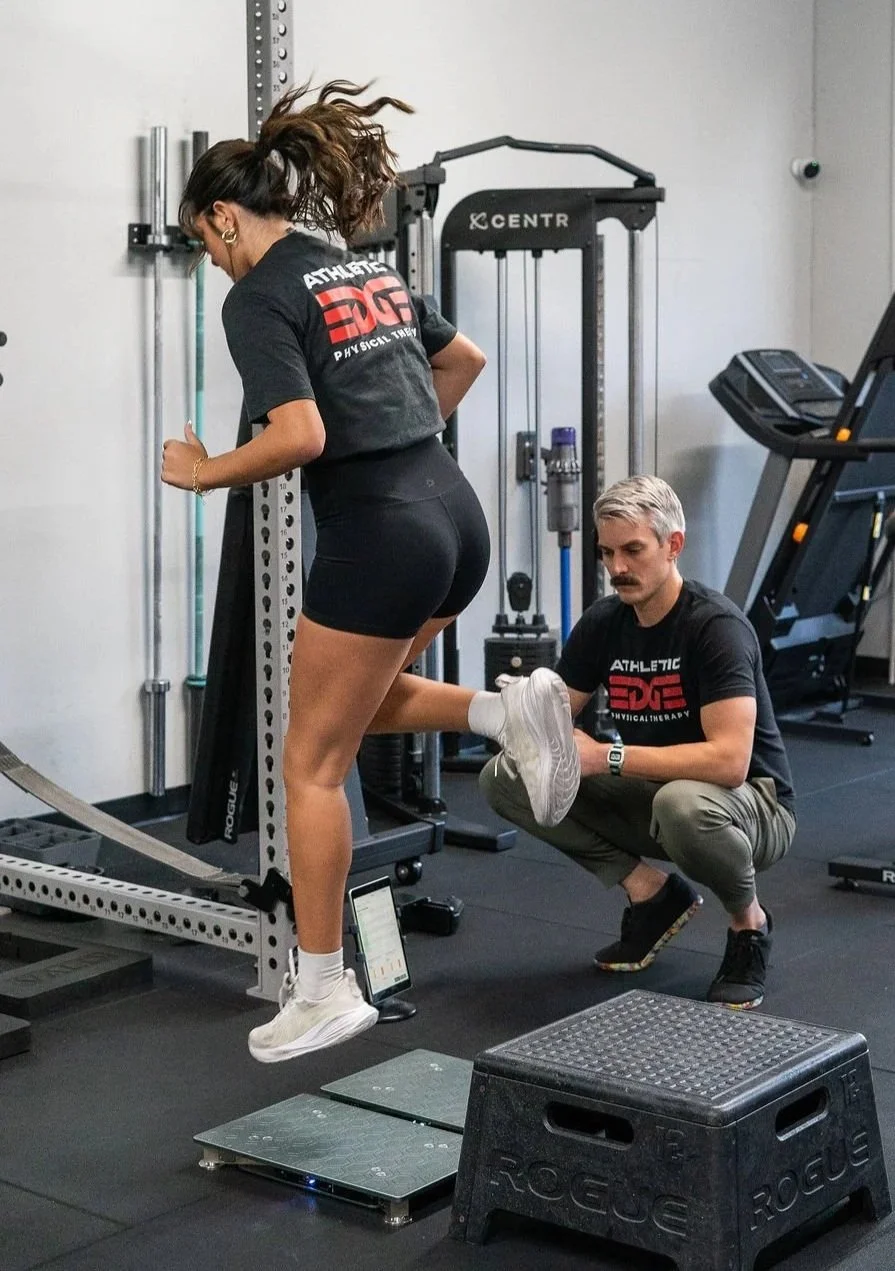
Force plate testing helps us assess jump performance, force production, and how an athlete absorbs and distributes force during landing and hopping tasks.
These measurements help us identify areas that may need more work and make more informed decisions about how to progress an athlete's training.
Returning to sport requires more than simply feeling good or regaining basic strength, objective testing is one piece of the bigger picture. We combine these results with movement assessment, sport-specific training, and clinical findings to help athletes prepare for the demands of returning to competition.
It is also important to understand that passing a return-to-sport test does not guarantee that an athlete will avoid another injury. Testing helps inform decision-making; it cannot eliminate risk.
The Panther Symposium consensus statement supports a multifactorial approach to return-to-sport decisions rather than relying on time alone.
Why Sport-Specific ACL Rehabilitation Matters
A basketball player, soccer player, volleyball player, and football player do not place identical demands on their knees.
Their rehabilitation programs should reflect those differences.
A basketball player needs to repeatedly jump, land, stop, and change direction. A soccer player needs to decelerate while running, cut in response to opponents, and maintain control while handling the ball. A volleyball player needs to tolerate repeated jumping and landing.
The underlying rehabilitation principles overlap, but the final stages of training should reflect the athlete's actual sport.
This is why a return-to-sport program should progress beyond general strengthening and introduce relevant athletic demands as the athlete becomes ready.
At Athletic Edge Physical Therapy in San Diego, our approach combines symptom management, identification of contributing factors, progressive strength and conditioning, and sport-specific preparation.
We want athletes to understand where they are in the process, what they still need to work on, and how their rehabilitation is preparing them for the next stage.
ACL Rehab in San Diego: Preparing for More Than a Return to Activity
Returning to sport after an ACL injury is a process.
An athlete may regain comfortable walking and basic strength well before they are ready to sprint, land, cut, or compete. Those abilities need to be developed progressively, with decisions guided by clinical findings and objective measures when appropriate.
Deceleration training is one important piece of that progression because athletes need to control force as well as produce it.
If you or your athlete is recovering from an ACL injury or ACL reconstruction, the next step is to understand which physical qualities have been restored and which still need work.
At Athletic Edge Physical Therapy, we provide one-on-one, performance-based physical therapy in San Diego, helping athletes progress from rehabilitation toward the demands of their sport.
Working your way back from an ACL injury? Contact Athletic Edge Physical Therapy to discuss your goals and learn more about our ACL rehabilitation and return-to-sport services.
Call or text: 858-371-2575
Website: Athletic Edge Physical Therapy
Frequently Asked Questions About Deceleration Training and ACL Rehab
What is deceleration training in ACL rehabilitation?
Deceleration training develops an athlete's ability to slow down and absorb force during movements such as running, landing, and changing direction. During ACL rehabilitation, it is introduced progressively as the athlete demonstrates the strength, control, and clinical readiness needed for more demanding activity.
Why is deceleration important after ACL surgery?
Many sports require athletes to stop quickly, land, and change direction. Rebuilding strength is essential, but athletes also need to regain control of these movements before returning to the demands of competition. Deceleration training is one component of a comprehensive rehabilitation program.
When can you start deceleration training after ACL reconstruction?
There is no single timeline that applies to every athlete. Readiness depends on factors such as healing, symptoms, strength, movement control, and tolerance for running and impact. Low-level exercises and high-speed cutting drills have very different demands, so progression should be guided by a qualified physical therapist and the treating medical team.
Does deceleration training prevent another ACL tear?
Deceleration training can address movement skills and physical qualities relevant to sporting demands, but it cannot guarantee prevention of another ACL injury. Risk is influenced by multiple factors, and no individual exercise or return-to-sport test can eliminate that risk. A comprehensive program should include appropriate strength, neuromuscular training, sport-specific progression, and clinical assessment.
What tests are used before returning to sport after ACL reconstruction?
A return-to-sport assessment may include quadriceps and hamstring strength testing, single-leg hop tests, jump performance, movement assessment, knee stability, symptoms, and psychological readiness. The assessment should also consider the athlete's sport and level of competition.
Is strength training enough for ACL rehab?
Strength training is essential, but it is not the whole process. Athletes also need to progressively develop balance, movement control, landing mechanics, running capacity, deceleration, and sport-specific skills. The appropriate combination depends on the athlete's stage of recovery and goals.
Can you do ACL return-to-sport rehab without playing your sport yet?
Yes. Many sport-specific qualities can be trained in a controlled environment before an athlete returns to full practice or competition. A progressive plan can build toward sport-specific movements while respecting the athlete's current capacity and medical guidance.
Where can I get ACL rehabilitation in San Diego?
Athletic Edge Physical Therapy offers one-on-one, performance-based physical therapy in San Diego, including ACL rehabilitation and return-to-sport preparation. Call or text 858-371-2575 or visit athleticedgept.com to learn more.
Research and References
Kotsifaki, A., et al. (2023). Aspetar clinical practice guideline on rehabilitation after anterior cruciate ligament reconstruction. British Journal of Sports Medicine, 57(9), 500–514. Read the clinical practice guideline.
Meredith, S. J., et al. (2020). Return to Sport After Anterior Cruciate Ligament Injury: Panther Symposium ACL Injury Return to Sport Consensus Group. Orthopaedic Journal of Sports Medicine. Read the consensus statement.
Situations Leading to Anterior Cruciate Ligament Injury in Sports: A Systematic Review with Meta-analysis. Read the research on ACL injury situations.
The Effects of Injury Prevention Programs on the Biomechanics of Landing Tasks: A Systematic Review With Meta-analysis. The American Journal of Sports Medicine. Read the study on landing biomechanics.