Why Stretching Isn’t Fixing Your Chronic Tightness (And What Actually Does)

Let’s start with a familiar situation.
You stretch your calves every morning. You roll your hips before workouts. You saved a mobility routine from Instagram/TikTok and actually use it.
And yet, you still feel tight. Same spots. Same stiffness. Same frustration.
If that sounds familiar, you are not alone and you are not doing anything wrong. This is one of the most common things we hear from active adults and athletes coming into Athletic Edge Physical Therapy in San Diego.
Here is the part that surprises most people:
Chronic tightness usually is not a flexibility problem. Stretching can feel good, but it is often not addressing the reason your body feels tight in the first place.
What “Chronic Tightness” Really Means
Tightness is a sensation, not a diagnosis. That sensation can come from multiple systems in your body, not just muscle length.
Below are the most common reasons we see in physical therapy.
1. Your Nervous System Is Protecting You
This is one of the biggest and most overlooked contributors to chronic tightness.
If your brain does not fully trust a joint or position, it increases muscle tone around that area. This is a protective response.
We commonly see this when:
Strength is lacking in certain ranges
A joint is not moving well
There has been a previous injury, even one from years ago
In these cases, muscles feel tight not because they are short, but because they are guarding.
Stretching a muscle that your nervous system is actively protecting may provide short-term relief, but the tightness usually returns once your body feels challenged again.
2. Training Load Is Exceeding What Your Body Can Handle
This shows up frequently in runners, lifters, and active adults who train hard on top of busy schedules.
Common examples include:
Calves that always feel tight when mileage increases
Hips that feel locked up during heavy lifting phases
Neck and upper back tightness from desk work combined with training
In these cases, tightness is often a sign that tissues are fatigued or underprepared for the load being placed on them. It is feedback from the system and not a sign that you need to stretch more.

3. True Tissue Stiffness
Yes, muscles and connective tissue can be stiff.
However, research shows that long-term tightness is more often related to strength deficits, coordination issues, or limited joint motion rather than actual muscle shortening.
This is why many people stretch consistently and still feel tight. The limiting factor is not flexibility.
Why Stretching Alone Usually Falls Short
Stretching primarily improves stretch tolerance, not long-term tissue change.
That means:
You may feel looser afterward
The nervous system temporarily allows more range
The effect is often short-lived
Research shows that stretching alone does not reliably create lasting structural changes in muscle, especially for active individuals who continue to train regularly
Behm and Chaouachi, 2011.
This explains a common cycle:
Stretch and feel better
Train and feel tight again
Repeat the same routine without long-term change
If that sounds familiar, you are not alone.
What Actually Helps Chronic Tightness Improve
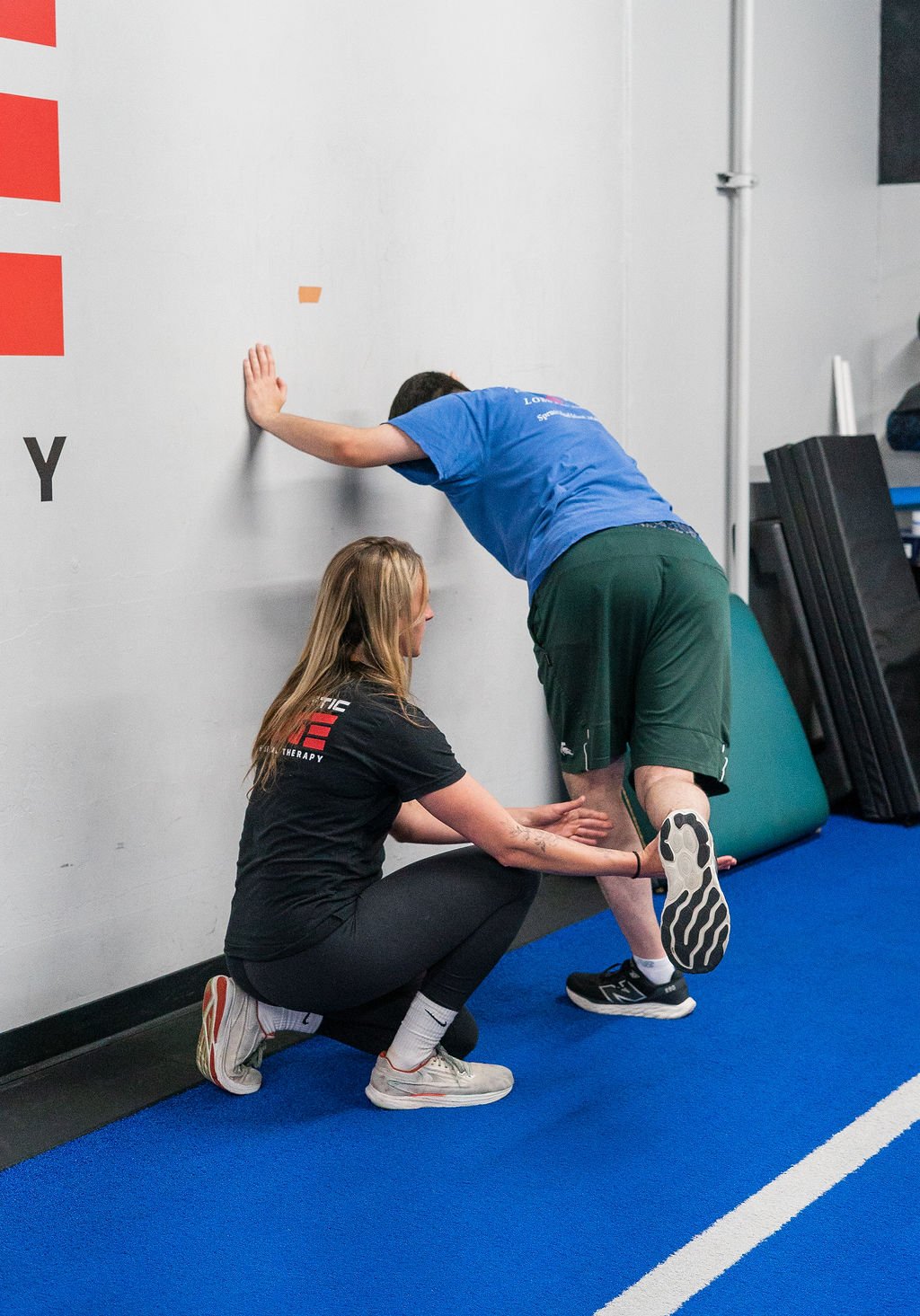
This is where performance-based physical therapy makes a difference.
At Athletic Edge Physical Therapy, we look beyond where you feel tight and focus on why your body is choosing to stay tight.
Restore Joint Motion
When joints don’t move well, surrounding muscles often compensate by increasing tone.

Common patterns include:
Limited ankle motion contributing to calf tightness
Limited hip rotation contributing to low back or hamstring tension
Limited thoracic mobility contributing to neck and shoulder tightness
Improving joint motion often changes how tight a muscle feels almost immediately.
Build Strength in the Positions Your Body Avoids
Your nervous system relaxes muscles when it feels stable.
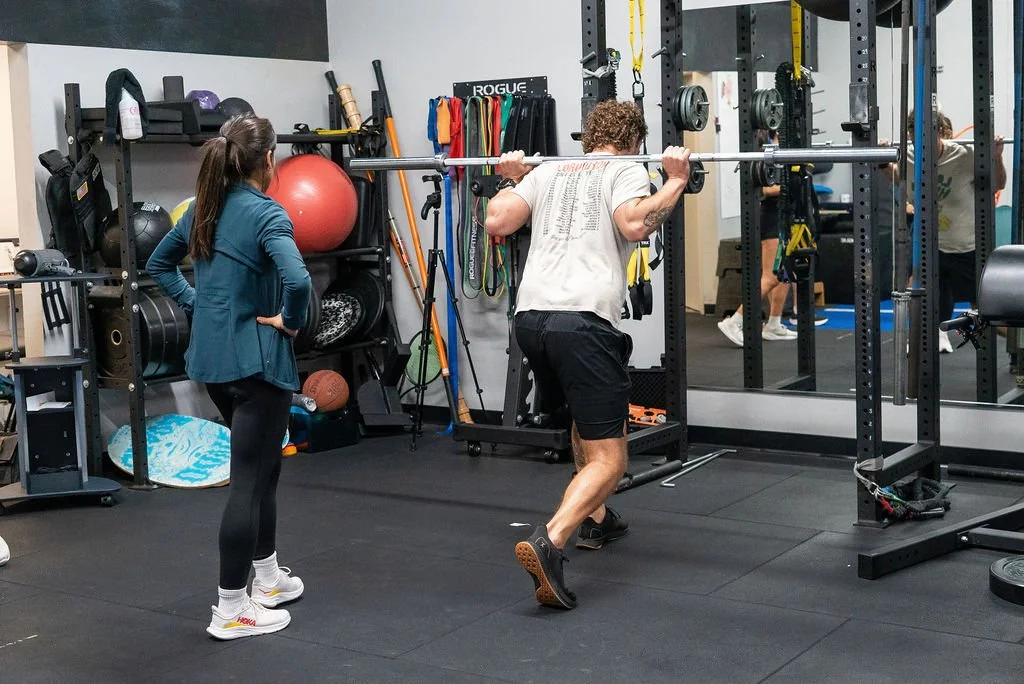
That means:
Strength through full ranges of motion
Controlled loading, especially slow and controlled eccentrics
Single-leg or asymmetrical work when appropriate
This is why many people notice they feel better once they start strengthening consistently, even if they stretch less.
Strength builds confidence for the nervous system.
Improve Motor Control and Coordination
Sometimes tightness is not about strength or mobility at all.
It can be related to poor timing or coordination, where muscles stay active longer than they should.
This is common in runners, CrossFit athletes, and people returning to training after injury. Targeted movement retraining often reduces tightness without aggressive stretching.
Use Stretching With More Intention
Stretching still has a role.
It tends to work best when:
Used after training or strengthening
Paired with active movement
Applied to the right tissue for the right reason
Stretching works best as a complement, not as the main solution.
When Tightness Is a Sign to Get Assessed
Normal post-workout stiffness is expected.
Tightness deserves more attention when:
It keeps returning despite consistent effort
It starts to affect performance or technique
Pain begins to develop
One side feels noticeably different from the other
There is a history of injury in that area
A proper assessment helps identify whether the issue is related to mobility, strength, coordination, or load management.
How Athletic Edge Physical Therapy Can Help
At Athletic Edge Physical Therapy, we work with active adults who are tired of chasing symptoms.
Our approach includes:
One-on-one performance-based care
Full movement assessments
Strength and mobility integrated together
Sport- and lifestyle-specific programming
If you want to learn more about how we approach movement assessments and individualized care, explore our Sports Physical Therapy services and Running and Performance Assessments pages on our website.
Key Takeaway
If stretching has not solved your tightness, it does not mean you are doing it wrong.
Most chronic tightness improves when strength, joint motion, and control improve.
When the right systems are addressed, the sensation of tightness often resolves on its own.
Looking for Performance Physical Therapy in San Diego?
If chronic tightness, recurring pain, or movement limitations are holding you back, we would love to help.
Book an evaluation with Athletic Edge Physical Therapy and get a plan that actually addresses the root cause.
Call/Text us: (858)371-2575
Email Us: info@athleticedgept.com
Book your FREE 15 Minute Discovery Call with a Physical Therapist HERE
Sources
Behm, D.G., and Chaouachi, A. European Journal of Applied Physiology, 2011
Proske, U., and Gandevia, S.C. Physiological Reviews, 2012
Bahr, R., and Krosshaug, T. British Journal of Sports Medicine, 2005
Journal of Orthopaedic and Sports Physical Therapy Clinical Practice Guidelines
Frequently Asked Questions About Chronic Tightness
-
Daily stretching can improve how tight a muscle feels temporarily, but it does not always address the reason your body is creating tension. Chronic tightness is often driven by strength deficits, limited joint motion, nervous system guarding, or training load that exceeds what your body is prepared for.
-
Not exactly. Tightness is a sensation, while stiffness refers more to physical resistance in tissue or joints. Many people feel tight even when tissue stiffness is not the primary issue. This is why stretching alone often does not lead to lasting improvement.
-
Not necessarily. Stretching can still be helpful when used intentionally, especially after training or paired with strengthening work. It just should not be the only strategy used to address chronic tightness.
-
Tightness often returns when your body does not feel strong or stable in certain positions. Training stress, fatigue, and poor load management can also cause muscles to increase tone as a protective response. Addressing strength, joint motion, and recovery tends to reduce this cycle.
-
It may be time to see a physical therapist if tightness:
Keeps returning despite consistent stretching or mobility work
Starts affecting performance or technique
Is paired with pain or asymmetry
Is associated with a previous injury
A physical therapist can determine whether the issue is related to strength, mobility, coordination, or load management.
-
Performance-based physical therapy focuses on identifying why your body feels the need to stay tight. Treatment may include joint mobility work, targeted strengthening, movement retraining, and education around training volume and recovery.
