ACL Rehab Is More Than Just Time: What “Return to Sport Ready” Really Means
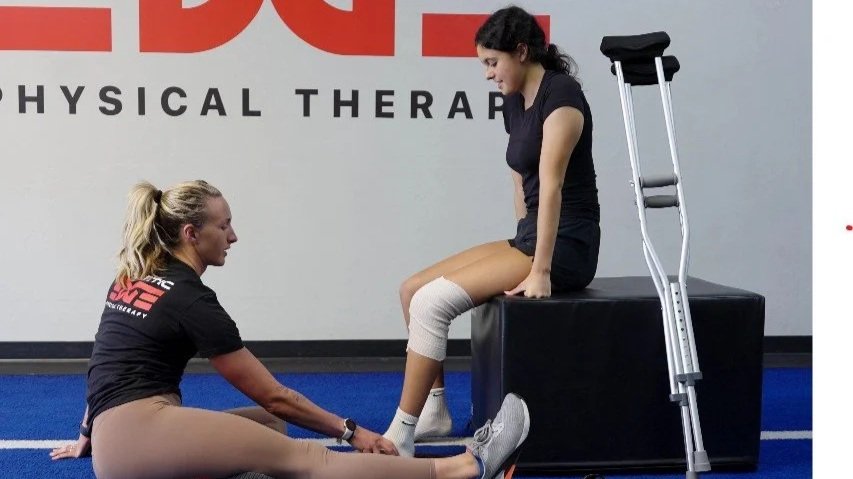
One of the most common questions we hear after ACL surgery is simple and understandable:
“How long until I can get back to my sport?”
Most people are given a timeline. Six months. Nine months. Sometimes twelve. And while timelines can be helpful, they are only part of the picture.
When it comes to ACL rehab, time alone does not determine whether someone is actually ready to return to sport.
At Athletic Edge Physical Therapy in San Diego, we see this all the time. Athletes who were cleared based on time alone but still feel hesitant, weak, or unstable. Others who technically hit the timeline but are not moving well enough to tolerate the demands of their sport.
That is because return to sport after ACL is not about the calendar. It is about capacity, confidence, and control.
Why Time Alone Is Not Enough After ACL Surgery
The ACL graft goes through predictable biological healing phases. That is why timelines exist. However, healing tissue does not automatically equal readiness to perform high level movements like cutting, jumping, sprinting, or landing on one leg.
Research consistently shows that athletes who return to sport without meeting objective strength and movement criteria are at a significantly higher risk of reinjury.
Grindem and colleagues found that athletes who did not meet return to sport benchmarks had a much higher rate of second ACL injuries compared to those who did, regardless of time since surgery.
In other words, the knee may be healed, but the system may not be prepared.
What “Return to Sport Ready” Actually Means
Being ready to return to sport after ACL surgery means the athlete can tolerate the physical and psychological demands of their sport with confidence and control.
That requires more than range of motion and basic strength.
Below are the key components we assess during ACL rehab at Athletic Edge Physical Therapy.
Strength Benchmarks That Matter
Strength is one of the strongest predictors of safe return to sport.
We look beyond simple exercises and focus on how force is produced and absorbed through the entire lower body.
Key areas include:
Quadriceps strength, particularly on the surgical side
Hamstring strength and symmetry
Hip and trunk strength for dynamic stability
Side to side comparisons to identify meaningful asymmetries
Many guidelines recommend at least 90 percent limb symmetry for strength before return to sport. However, we also consider how that strength shows up during real movement, not just isolated testing.
This is where performance based physical therapy differs from time based rehab.
You can learn more about how we approach this through our ACL rehabilitation services and sports physical therapy programs.
Hop Testing and Force Plate Testing
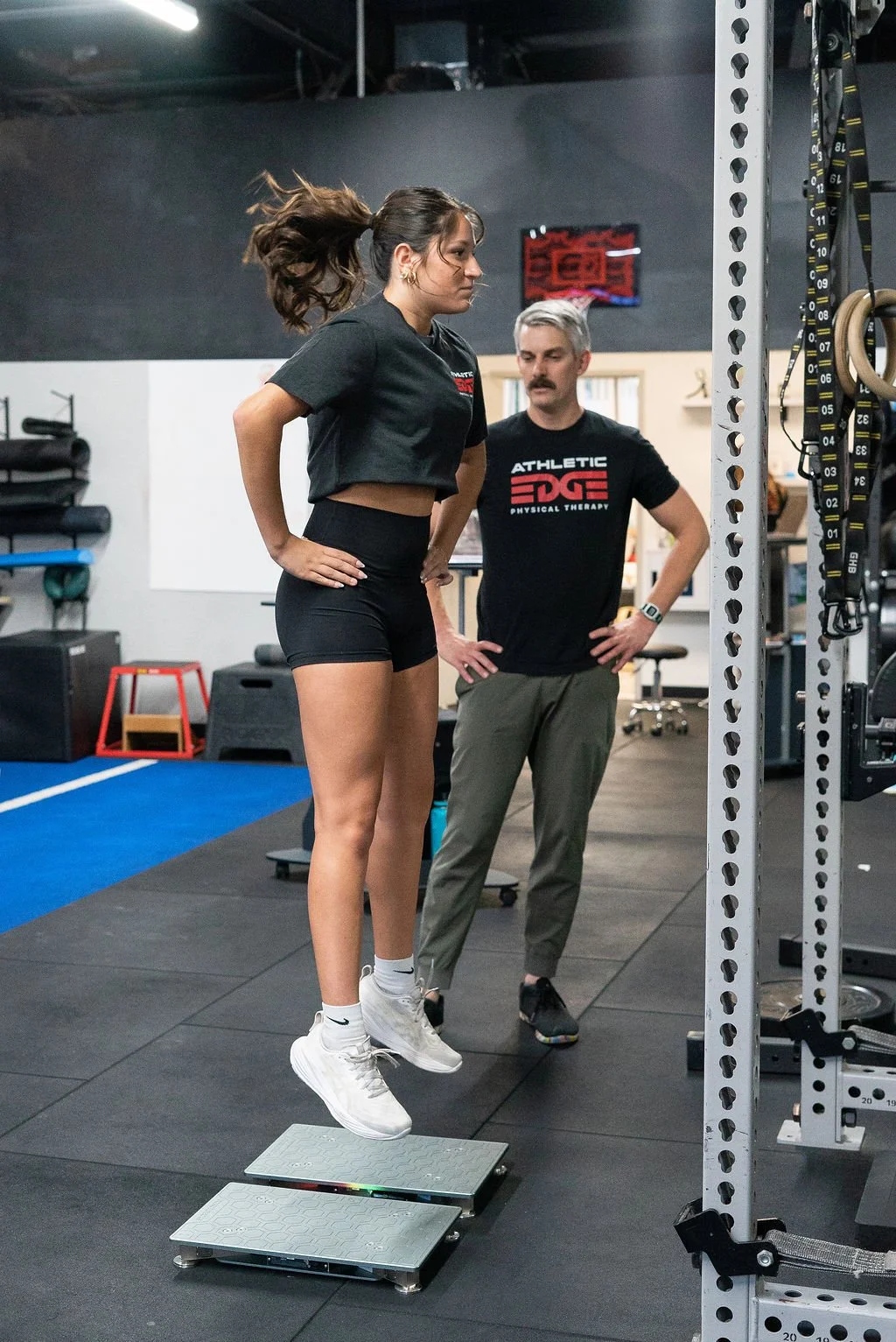
Strength alone is not enough. How an athlete uses that strength during dynamic tasks matters just as much.
Hop testing helps assess:
Power production
Landing mechanics
Limb symmetry
Confidence with single leg tasks
Common tests include single leg hops, triple hops, and crossover hops. These provide valuable information, but they do not always tell the full story.
That is where force plate testing adds another layer.
Force plates allow us to measure:
How much force each leg produces
How quickly force is generated
How evenly load is absorbed during landing
Subtle asymmetries that are not visible to the eye
This data helps guide progression and reduces guesswork during return to sport decisions. It also allows us to track progress over time rather than relying on one clearance day.
If you are interested in this type of objective testing, it is part of our performance testing and return to sport assessments.
Psychological Readiness Is Not Optional
Even when strength and testing look great, many athletes still hesitate.
This is not weakness. It is a normal response after a major injury.
Psychological readiness includes:
Confidence in the knee during sport specific tasks
Trust in the surgical leg
Reduced fear of reinjury
Ability to react without overthinking movement
Studies show that fear and lack of confidence are major predictors of reinjury and delayed return to sport. Ignoring this piece often leads to altered mechanics and compensation patterns.
During ACL rehab, we intentionally layer in:
Gradual exposure to sport specific movements
Reactive and unpredictable drills
Progressive loading that builds confidence, not just strength
The goal is not just clearance. The goal is readiness.
Long Term Injury Prevention After ACL
Return to sport is not the finish line. It is a transition.
Athletes who successfully return after ACL surgery still face elevated injury risk, especially in the first two years. Long term success depends on continued strength training, movement quality, and load management.
Key components of injury prevention include:
Ongoing lower body strength training
Proper landing and deceleration mechanics
Progressive exposure to cutting and change of direction
Monitoring training volume and fatigue
This is why we emphasize long term planning, not just short term rehab. Many athletes benefit from continued performance focused physical therapy even after returning to sport.
How Athletic Edge Physical Therapy Approaches ACL Rehab in San Diego
At Athletic Edge Physical Therapy, ACL rehab is individualized, data informed, and performance driven.
Our approach includes:
One on one physical therapy sessions
Objective strength and movement testing
Hop testing and force plate analysis
Sport specific return to play progressions
Ongoing communication about readiness and expectations
Whether you are an athlete aiming to return to competition or an active adult wanting to move confidently again, our goal is the same. We want you to return strong, prepared, and resilient.
You can learn more about our approach through our ACL rehab services, sports physical therapy, and return to sport assessments.
Looking for ACL Rehab in San Diego?
If you are navigating ACL recovery or planning your return to sport, we would love to help guide the process.
Schedule an evaluation with Athletic Edge Physical Therapy and take the guesswork out of your return to sport.
We regularly share ACL rehab progress, return to sport testing, and behind-the-scenes looks at performance-based physical therapy.
Follow @athletic_edgept for education, rehab insight, and athlete-focused care.

Sources
Grindem, H. et al. British Journal of Sports Medicine
Journal of Orthopaedic and Sports Physical Therapy ACL Clinical Practice Guidelines
International Olympic Committee Consensus Statements on Return to Sport After Injury