Cycling-Related Knee Pain: Causes, Bike Fit Factors, and How to Fix It
Knee pain is one of the most common issues cyclists experience — and one of the most frustrating. Whether you’re training for long rides, racing, or just riding for fitness, knee pain can quickly limit performance and enjoyment on the bike.
The good news? Most cycling-related knee pain is mechanical and fixable, especially when addressed early.
Why Knee Pain Happens in Cycling
Cycling is a highly repetitive sport. Each pedal stroke places load through the knee, and over the course of a ride that can add up to thousands of repetitions.
If something in your bike setup, movement pattern, or training load is slightly off, that repetitive stress can start to overload tissues that aren’t built to handle it. Small errors — repeated enough times — create big problems.
Location Matters: Where You Feel Knee Pain Tells a Story
The location of your knee pain often gives strong clues about what needs to be addressed in your bike fit or riding mechanics.
Front of the Knee Pain (Patellar or Anterior Knee Pain)
This is the most common type of cycling-related knee pain and is often associated with:
Saddle set too low
Saddle positioned too far forward
Riding big gears at a low cadence
A low saddle increases knee bend at the top of the pedal stroke, which raises compressive forces behind the kneecap and can irritate the patellofemoral joint over time.
Back of the Knee Pain (Posterior Knee Pain)
Pain behind the knee typically suggests:
Saddle set too high
Over-reaching at the bottom of the pedal stroke
This position can overload the hamstrings and posterior knee structures, especially on longer rides or higher mileage weeks.
Inside or Outside Knee Pain (Medial or Lateral Knee Pain)
Side-specific knee pain often points to alignment issues, including:
Cleat position or rotation
Stance width (Q-factor)
Natural hip, knee, or foot asymmetries
Saddle height being too high or too low
These issues affect how the knee tracks during each pedal stroke — even millimeter-level changes can make a meaningful difference.
Key Bike Fit Factors That Influence Knee Pain
Saddle Height
A saddle that’s too high or too low can both cause knee pain — just in different ways. The goal is smooth, efficient power through the pedal stroke without excessive knee bend or locking out at the bottom.
Saddle Fore–Aft Position
Where your saddle sits relative to the bottom bracket affects how load is distributed between the hips and knees. A saddle positioned too far forward tends to overload the knee, while too far back can strain the hips and hamstrings.
Cleat Position
Cleats determine how your foot interfaces with the pedal and play a major role in knee tracking. Small adjustments — sometimes just a few millimeters — can significantly reduce stress on the knee.
Cadence and Gearing
Even with a solid bike setup, consistently riding at a low cadence with high resistance increases knee joint stress. Cadence strategy matters just as much as fit.
Why a Professional Bike Fit Makes a Difference
Cycling knee pain is rarely caused by one single issue. More often, it’s the result of multiple small factors stacking together.
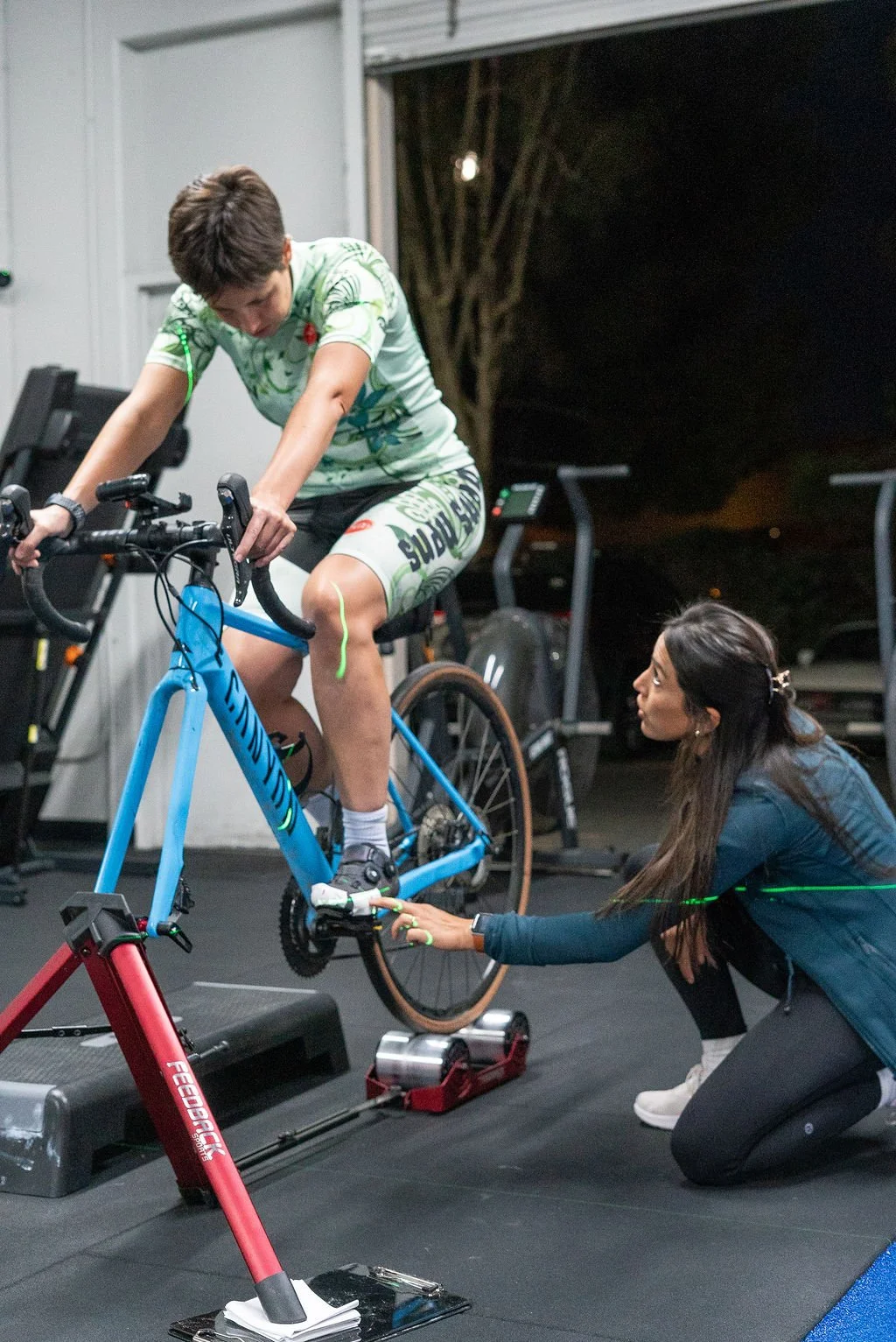
At Athletic Edge Physical Therapy, our professional bike fit process looks beyond just numbers and measurements. We assess:
Your individual anatomy and mobility
How your knees track dynamically while pedaling
Your riding style, goals, and injury history
Rather than guessing, adjustments are made systematically and intentionally, specific to your body and your bike.
Don’t Ignore Early Warning Signs
Mild knee discomfort is easy to brush off — especially if it only shows up on longer rides. But pain is your body’s early warning system.
Addressing fit and movement issues early can help prevent:
Chronic knee pain
Time off the bike
Long-term joint irritation
Knee pain that starts lingering even off the bike
When Should You Get a Bike Fit?
If you’re experiencing any knee pain related to cycling, it’s time for a bike fit.
Even if you’re currently pain-free, a professional bike fit can help determine whether your setup is truly optimal for your riding style and training volume. Staying ahead of small issues now can help you avoid injuries that force time away from the bike later.
Frequently Asked Questions About Cycling Knee Pain (San Diego Cyclists)
-
Yes. Knee pain is one of the most common complaints among cyclists of all levels — from weekend riders to competitive athletes. Because cycling involves thousands of repetitive pedal strokes, even small issues with bike fit, alignment, or training load can lead to irritation over time.
The good news: most cycling-related knee pain is mechanical and highly treatable when addressed early.
-
Not always — but you shouldn’t ignore it.
Mild or early knee pain doesn’t always mean you need complete rest. In many cases, adjusting bike fit, modifying training load, and addressing movement or strength deficits can allow you to keep riding safely. Pushing through pain, however, often leads to longer recovery times and lingering issues off the bike.
A sports physical therapist can help determine whether riding is safe and what needs to change.
-
In many cases, yes.
A professional bike fit addresses how your body interfaces with the bike — saddle height, saddle position, cleat setup, and alignment — all of which directly influence knee stress. For many cyclists, knee pain improves significantly once fit-related stressors are corrected.
That said, bike fit works best when combined with an assessment of mobility, strength, and movement patterns.
-
A bike shop fit focuses primarily on bike positioning.
A physical therapy bike fit — like those performed at Athletic Edge Physical Therapy — looks at both the bike and the rider. This includes:
Joint mobility and flexibility
Strength and asymmetries
Knee tracking and movement quality
Injury history and training goals
This approach is especially important if you’re dealing with pain, a previous injury, or recurring issues.
-
Yes — especially if you’re increasing mileage, intensity, or training for an event.
A proactive bike fit can identify small inefficiencies before they turn into pain or injury. Many cyclists use bike fits as part of injury prevention, performance optimization, and long-term joint health.
-
Absolutely.
Physical therapy for cyclists often includes:
Strength training to improve knee and hip control
Mobility work to reduce compensations
Gait and movement analysis
Load management and return-to-ride planning
This helps ensure your body can tolerate the demands of riding — not just survive them.
-
San Diego’s year-round riding weather is a blessing — and a hidden risk.
Because cyclists here rarely take long off-seasons, repetitive stress can accumulate without enough recovery. This makes proper bike fit, strength training, and early intervention even more important for long-term knee health.
-
You should consider seeing a physical therapist if:
Knee pain shows up during or after rides
Pain is getting worse over time
Discomfort lingers even when you’re not riding
You’ve already tried adjusting your bike without relief
Early assessment often means faster resolution and less time off the bike.
-
Yes.
At Athletic Edge Physical Therapy, we work with recreational riders, endurance athletes, triathletes, and competitive cyclists throughout San Diego. Care is individualized based on your riding style, goals, and training demands — not a one-size-fits-all protocol.