ACL Injury: What to Expect From Rehab to Return to Sport (A Complete Timeline)
Tearing your ACL is one of the most feared injuries in sports — and for good reason. It sidelines athletes for months, requires surgical reconstruction in most active patients, and demands a long, disciplined rehabilitation process. But here's what many athletes don't know: the quality of your rehab, not just the surgery, is what ultimately determines how well you return to sport.
At our San Diego sports performance physical therapy clinic, ACL rehabilitation is one of our specialties. This guide walks you through exactly what to expect — from the day of injury through the day you step back on the field, court, or track — so you can approach your recovery with confidence, not fear.
Understanding the ACL and Why It Matters
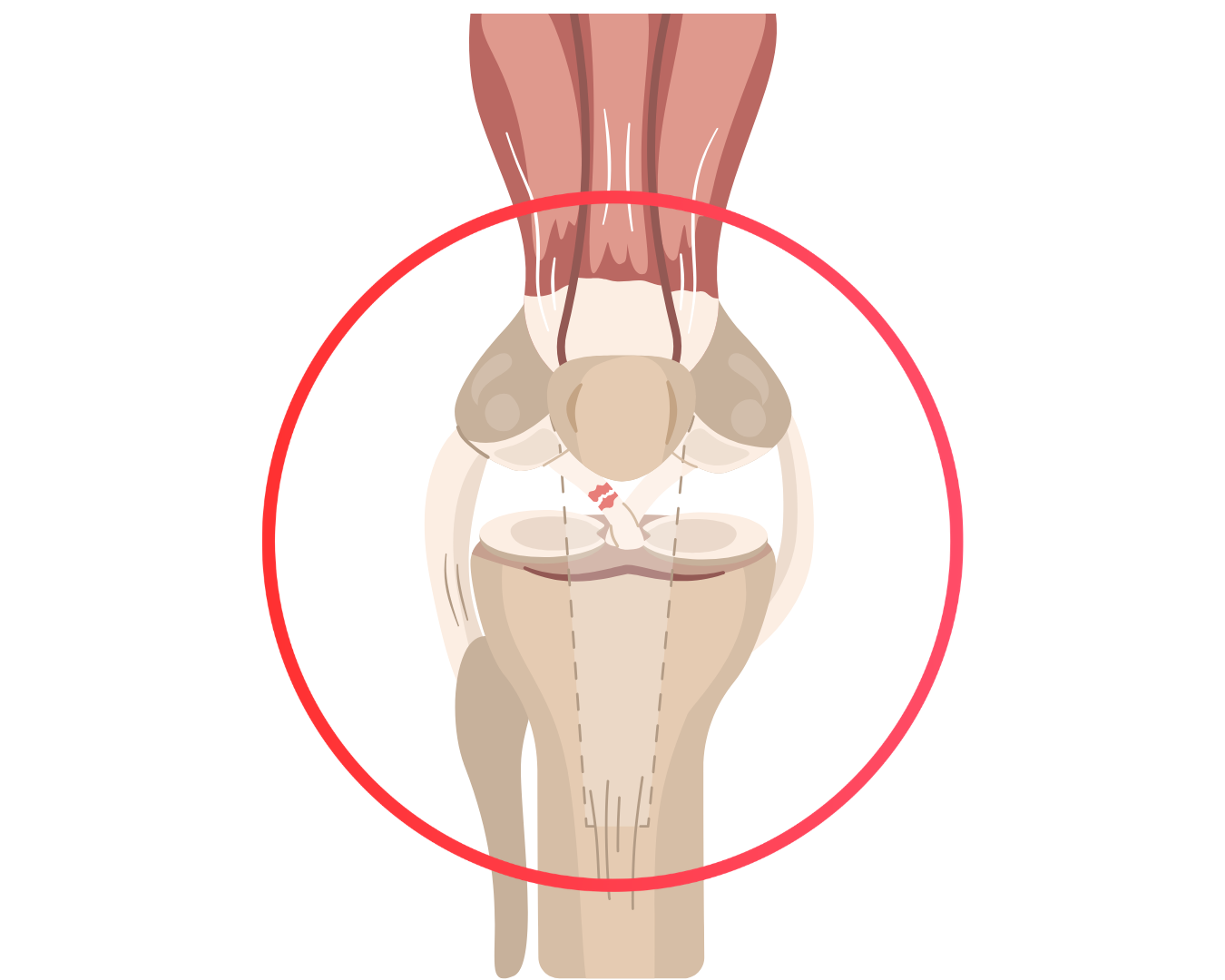
The anterior cruciate ligament (ACL) is one of four major ligaments in the knee. It runs diagonally through the middle of the joint and is primarily responsible for preventing the tibia from sliding forward relative to the femur, and for controlling rotational stability. It's most commonly torn during non-contact movements involving sudden deceleration, pivoting, or landing from a jump — which is why sports like soccer, basketball, football, and skiing carry higher ACL injury rates.
When the ACL tears, athletes typically report hearing or feeling a "pop," followed by rapid swelling, instability, and significant pain. Most active individuals who want to return to cutting or pivoting sports will require surgical reconstruction, typically using a graft taken from the patellar tendon, hamstring, or a cadaver source.
Pre-Surgery: The "Prehab" Phase (Weeks 1–4)
Here's something many athletes (and even some providers) overlook: the weeks before ACL surgery matter enormously. Research consistently shows that patients who begin physical therapy before surgery — sometimes called "prehabilitation" or prehab — have significantly better outcomes than those who go straight to the operating table.
Goals during the prehab phase include:
Reducing swelling and restoring full range of motion
Rebuilding quad and hamstring activation and strength
Improving single-leg stability and neuromuscular control
Mentally preparing for the road ahead
Arriving at surgery with a strong, mobile, pain-free knee gives the graft the best possible environment to heal — and research shows it can cut months off your overall recovery.
Phase 1: Early Post-Surgical Recovery (Weeks 0–6)
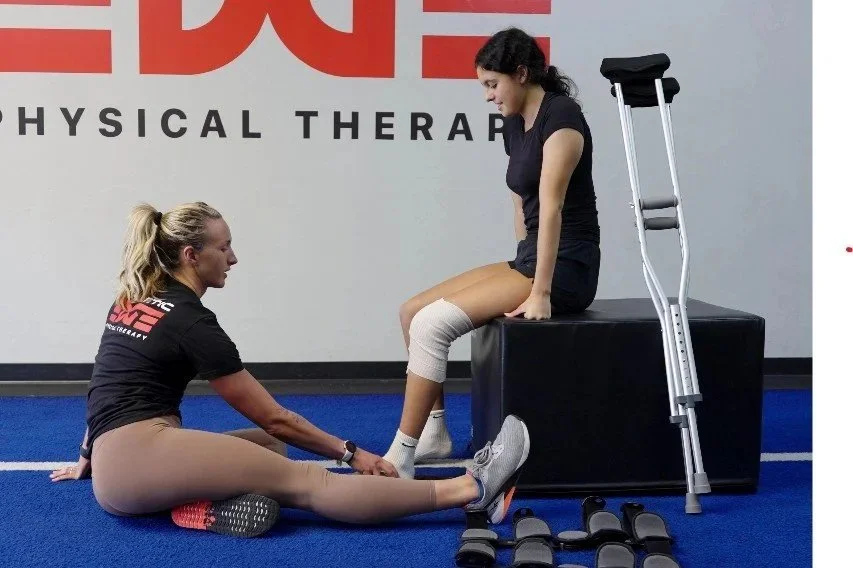
The first six weeks after ACL reconstruction are focused on protecting the graft, managing inflammation, and regaining basic function. Your surgical team will determine your specific weight-bearing and brace protocols, but in general you can expect:
Crutches for the first 1–2 weeks, transitioning to full weight-bearing as tolerated
Ice and compression to manage swelling
Gentle range-of-motion exercises to work toward full extension and 90+ degrees of flexion
Quad sets, straight-leg raises, and ankle pumps to begin muscle activation
Gait training to restore a normal walking pattern
Pain and swelling are normal during this phase — your job is not to push through them aggressively, but to work steadily within your window of tolerance. A good sports PT will help you find that balance every session.
Phase 2: Building the Foundation (Weeks 6–12)
Once you have full range of motion, minimal swelling, and good quad control, rehabilitation shifts toward building strength, stability, and movement quality. This phase typically includes:
Progressive closed-chain strengthening (squats, lunges, step-ups)
Single-leg balance and proprioception training
Hip and glute strengthening (often a missing piece in knee rehab)
Stationary cycling and pool-based cardio to maintain fitness
Manual therapy to address scar tissue, mobility restrictions, and muscle tension
This is also the phase where Blood Flow Restriction (BFR) training can be incredibly valuable — helping you rebuild quad and hamstring strength efficiently without over-stressing the healing graft.
Phase 3: Sport-Specific Training (Months 3–6)
By the three-month mark, most patients are moving well, have significant strength, and are eager to get back to activity. But this is also one of the most critical — and commonly rushed — phases of ACL rehab.
The graft goes through a process called "ligamentization," in which it remodels from a transplanted tissue into something that functions more like a native ACL. This process takes time, and the graft is actually at its weakest mechanical strength around the 3–4 month mark — right when athletes often feel their best. This is a dangerous mismatch.
Phase 3 focuses on:
Progressive plyometric training (hopping, bounding, landing mechanics)
Sport-specific agility drills (cutting, pivoting, direction changes)
Running progression from straight-line jogging to full speed
Strength testing to ensure symmetry between the injured and uninjured limb
Mental readiness and confidence building
Phase 4: Return-to-Sport Testing (Months 6–9+)
One of the most important — and most overlooked — parts of ACL rehab is objective return-to-sport testing. At our San Diego clinic, we never clear an athlete to return to full competition based on time alone. Instead, we use a battery of functional tests to assess whether the athlete is truly ready:
Limb symmetry index (LSI) for strength — we look for 90%+ symmetry between limbs on quad and hamstring strength testing
Single-leg hop tests measuring power, distance, and landing mechanics
Agility and change-of-direction testing
Psychological readiness assessment — fear of re-injury is a real and clinically significant barrier to return
Research shows that athletes who return to sport before achieving adequate strength symmetry have significantly higher re-injury rates. We take this responsibility seriously.
Re-Injury Prevention After ACL Reconstruction
Unfortunately, athletes who have torn one ACL are at elevated risk of tearing the other — and of re-tearing the reconstructed one. This is why we build ongoing injury prevention programming into every ACL rehab plan, including neuromuscular training, landing mechanics coaching, and sport-specific movement screening.
The goal isn't just to get you back on the field. The goal is to get you back stronger, smarter, and more durable than you were before the injury.
Recovering from an ACL injury in San Diego? Our sports performance PT team specializes in evidence-based ACL rehab and return-to-sport testing. Book your free consultation today.