Acute to Chronic Workload Ratio (ACWR): A Smarter Way to Prevent Overuse Injuries

If you’re a runner increasing mileage, a CrossFit athlete ramping volume, or a field sport athlete entering preseason, there’s one variable that predicts injury risk more consistently than almost anything else:
Training load spikes.
In sports medicine research, this is often measured using the Acute to Chronic Workload Ratio (ACWR) — a model that compares short-term workload to longer-term training base.
At Athletic Edge Physical Therapy in San Diego, we routinely analyze workload patterns in athletes dealing with:
Achilles tendinopathy
Patellar tendon pain
Stress reactions
Shin splints
Rotator cuff irritation
Low back pain in lifters
More often than not, the issue isn’t weakness — it’s load mismanagement.
What Is the Acute to Chronic Workload Ratio?
The Acute to Chronic Workload Ratio (ACWR) compares:
Acute workload: Total training load from the past 7 days
Chronic workload: Average training load from the previous 3–6 weeks
The theory, originally described by Tim Gabbett and colleagues, proposes that injury risk increases when short-term workload greatly exceeds what the athlete has been prepared for over time.¹
In simple terms:
Your body tolerates what it’s prepared for — not what you suddenly throw at it.
What the Research Says About Workload Spikes
Several peer-reviewed studies have found:
Rapid increases in training load are associated with significantly higher injury risk.¹²
Athletes with an ACWR above ~1.5 demonstrate increased likelihood of non-contact injury.¹
A consistent chronic workload may actually be protective when built progressively.¹
Gabbett’s 2016 British Journal of Sports Medicine paper described the “sweet spot” ratio between approximately 0.8–1.3 as associated with lower injury risk in team sport athletes.¹
This has since been studied in:
Rugby
Cricket
Soccer
Australian football
Endurance sports
While application varies by sport, the consistent theme remains:
Sudden workload spikes increase injury risk.
Why This Matters for Runners in San Diego
We see this pattern constantly in:
Half marathon prep
Marathon build cycles
Trail running transitions
Post-injury return to mileage
A common scenario:
Athlete averages 20 miles/week for 4 weeks
Suddenly runs 35 miles in one week
ACWR = 35 ÷ 20 = 1.75
Research suggests this spike significantly increases risk for overuse injuries like:
Achilles tendinopathy
Patellofemoral pain
IT band syndrome
Tibial stress injuries³
Importantly, tendon tissue adapts more slowly than cardiovascular fitness. That mismatch creates vulnerability.
ACWR in CrossFit & Strength Athletes

Workload applies beyond endurance sports.
In CrossFit athletes, spikes often occur during:
The CrossFit Open
New strength cycles
High-rep gymnastics progressions
Return after time off
In strength sports, training load is often calculated as:
Sets × Reps × Load × Frequency
Research in resistance training shows that abrupt increases in volume or intensity are associated with elevated injury risk.⁴
Tendons in particular require gradual progressive overload for optimal adaptation.⁵
When volume increases too quickly:
Patellar tendon pain develops
Rotator cuff irritation appears
Lumbar spine symptoms flare
It’s rarely random.
Field & Court Sports: The Preseason Spike
Preseason is one of the highest-risk periods for non-contact injuries.
Research across multiple sports has shown:
Sudden increases in high-speed running distance elevate soft tissue injury risk.²
High ACWR values are associated with increased hamstring strain risk in field athletes.⁶
This is why ACL prevention and return-to-sport programs now emphasize progressive workload exposure, not just strength testing.
Important Criticisms & Clinical Perspective
It’s important to note:
ACWR is not without criticism.
Recent literature has questioned statistical modeling limitations and predictive validity when applied universally.⁷
ACWR should not be viewed as a standalone diagnostic tool.
Instead, it is best used as:
A load monitoring framework
A risk management strategy
One piece of a larger clinical picture
At Athletic Edge PT, we integrate workload analysis with:
Movement assessment
Strength testing
Tissue capacity evaluation
Sleep, nutrition, and stress review
Load matters — but context matters more.
How We Apply ACWR in Sports Physical Therapy
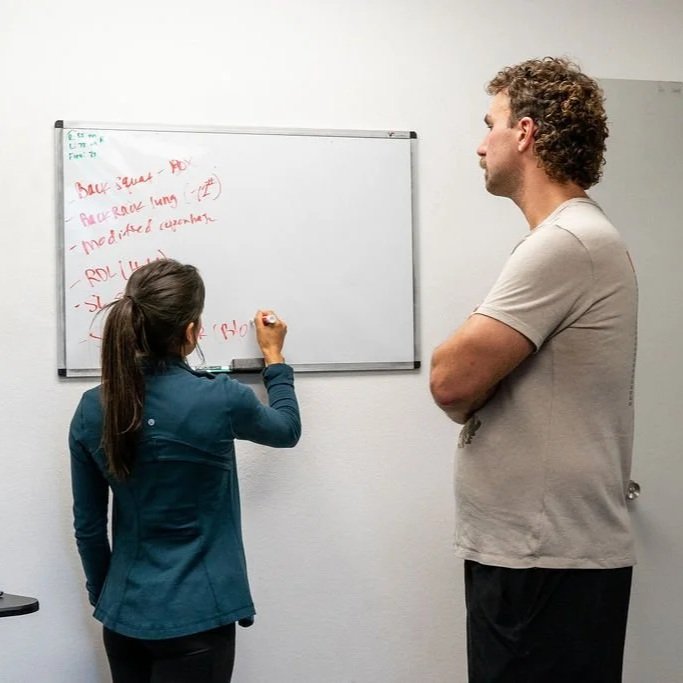
When evaluating athletes, we assess:
Weekly mileage trends
Intensity distribution
Frequency changes
Skill volume (double unders, muscle-ups, jumps)
Time under tension in lifting cycles
If pain is present, we:
Reduce irritability
Rebuild chronic workload gradually
Reintroduce sport-specific stress in structured phases
Because durability isn’t built through rest alone — it’s built through progressive exposure.
Key Takeaways for Athletes
Avoid increasing weekly workload more than ~10–15% when possible
After time off, assume your chronic workload has dropped
Tendons adapt slower than lungs
Fitness gained quickly can disappear quickly
Injury prevention is load management
Most overuse injuries aren’t mysterious.
They’re math.
Work With San Diego’s Sports Physical Therapy Specialists
If you’re:
Preparing for a race
Entering preseason
Recovering from Achilles or patellar tendon pain
Returning after ACL reconstruction
Training for CrossFit competition
We can help you structure a progressive, evidence-based plan.
Athletic Edge Physical Therapy
📍 5995 Mira Mesa Blvd. Suite H, San Diego, CA 92121
📞 (858) 371-2575
📧 info@athleticedgept.com
Book an evaluation and build long-term resilience — not just short-term relief.
Peer-Reviewed References
Gabbett TJ. The training-injury prevention paradox: should athletes be training smarter and harder? Br J Sports Med. 2016;50(5):273–280.
Hulin BT, Gabbett TJ, Lawson DW, et al. The acute:chronic workload ratio predicts injury: high chronic workload may decrease injury risk. Br J Sports Med. 2016;50(4):231–236.
Nielsen RO, et al. Training errors and running related injuries: a systematic review. Int J Sports Phys Ther. 2012.
Soligard T, et al. How much is too much? Load management in elite athletes. Br J Sports Med. 2016.
Bohm S, et al. Adaptation of tendon to mechanical loading. J Exp Biol. 2015.
Malone S, et al. High chronic workload and the acute:chronic workload ratio are associated with injury risk in elite Gaelic football. J Sci Med Sport. 2017.
Impellizzeri FM, et al. Acute:chronic workload ratio: conceptual issues and fundamental pitfalls. Int J Sports Physiol Perform. 2020.